

Clark County Commercial Roofs

Winchester Spray Foam Roofing

Winchester spray foam roofing that changes how water leaves the roof: tapered foam and crickets steer it to drains and scuppers before the topcoat goes on.

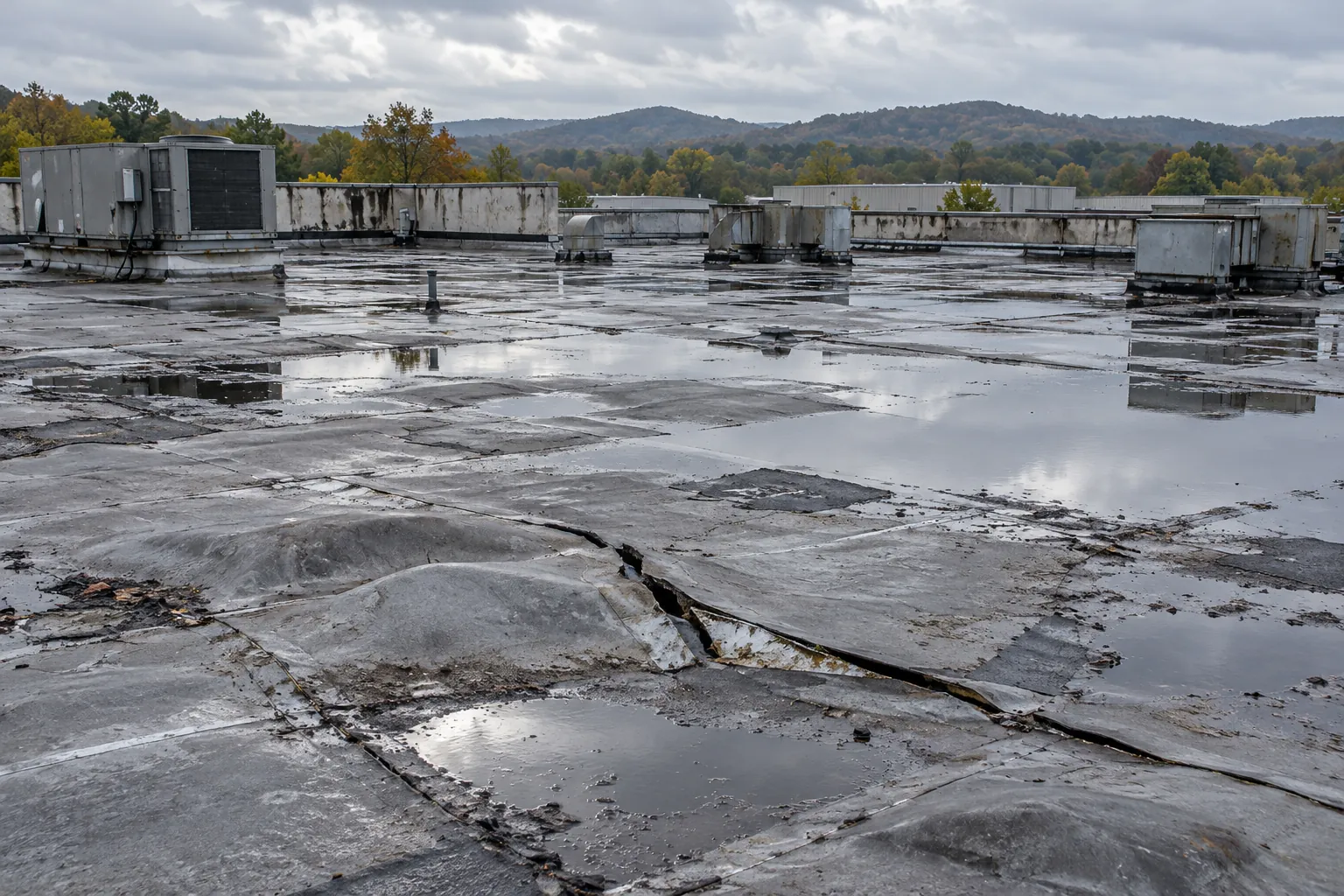
Aged flat roof with ponding water, blistered membrane, and split seams

Getting Water Off Long Winchester Roofs

Many Winchester roofs hold water because they are nearly dead flat or their drains sit high. Foam lets us reshape the surface without new framing.

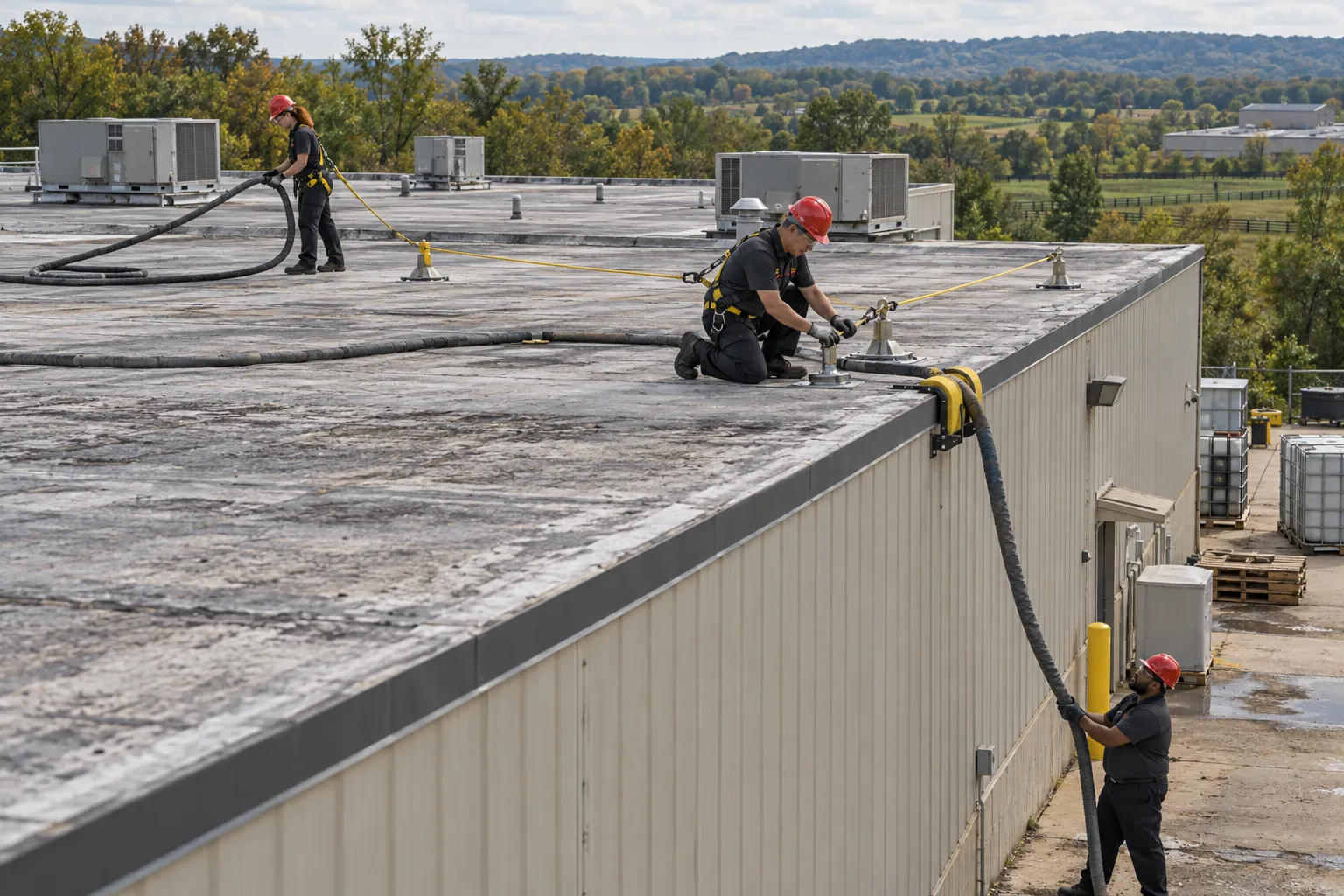
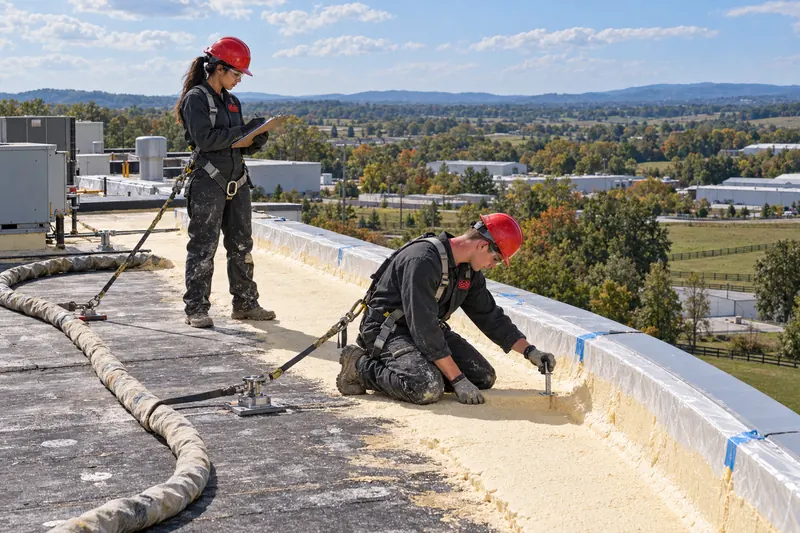
Crew running spray hose onto an aged flat roof and setting fall protection at the edge

Spray foam can be built thicker in one area and thinner in another, so the roof gets shaped as it is sprayed. A cricket is a raised ridge of foam that splits water around a curb or sends it toward a drain instead of letting it pool behind.

Older downtown buildings add one more step: through-wall scuppers in brick parapets. Their openings have to stay clear and full-size after the foam goes on, so we set the finished height around each scupper before spraying.

  • Ponding areas mapped after a rain and marked on the plan
  • Drain bowls cleared and checked for size
  • Tapered thickness planned from high point to outlet
  • Scupper openings kept full-size through the parapet

Where Water Stalls On A Winchester Roof

Water follows the lowest path it can find. These are the five places on a long roof where it stops instead.

Long commercial roof plan sketch with five numbered places where water stalls12345
Sketch of a long commercial roof, drawn for illustration.
  1. Drain Set Too High

    When the drain bowl sits above the surrounding roof, a shallow pond forms around it. Foam is built up around the bowl so water drops into it.

  2. Midfield Low Spot

    Deck deflection between joists leaves a dip far from any outlet. A cricket or extra thickness pushes that water toward the nearest drain.

  3. Behind A Curb

    Water dams on the uphill side of a wide HVAC curb. A small foam cricket behind it splits the flow around both sides.

  4. Edge With No Outlet

    Some roof edges drop toward a wall that has no scupper. We taper the foam away from that wall and toward an outlet that exists.

  5. Clogged Scupper Box

    Leaves and grit pack the scupper box until water backs up the parapet. Openings are cleared, measured, and kept clear of overspray.

Benefits of Coating Your Roof

On a roof that holds water, the gains from foam and coating come from better drainage and a topcoat matched to it.

  • Ponds That Never Dry Out

    Standing water leaves dirt rings and wears the old surface faster in those spots.

    What Foam And Coating Do

    Tapered foam moves water toward outlets, and a silicone topcoat holds up where some water still lingers.

  • Drains Fighting The Slope

    A drain or scupper set above the roof surface leaves water behind.

    What Foam And Coating Do

    Foam thickness is set around each outlet so the finished surface slopes down into it.

  • A Reroof Just For Drainage

    Correcting slope with a tear-off means new tapered board and a full membrane.

    What Foam And Coating Do

    Foam builds the slope in place over a dry roof, and the insulation comes with it.

  • Wet Parapet Walls

    Water standing against brick parapets soaks the base of the wall and its flashing.

    What Foam And Coating Do

    Foam is sprayed up the inside face of the parapet, and water is steered away from the wall line.

Commercial Roof Coating Options for Winchester

Three approaches for Winchester roofs, set by how much water the roof holds now.

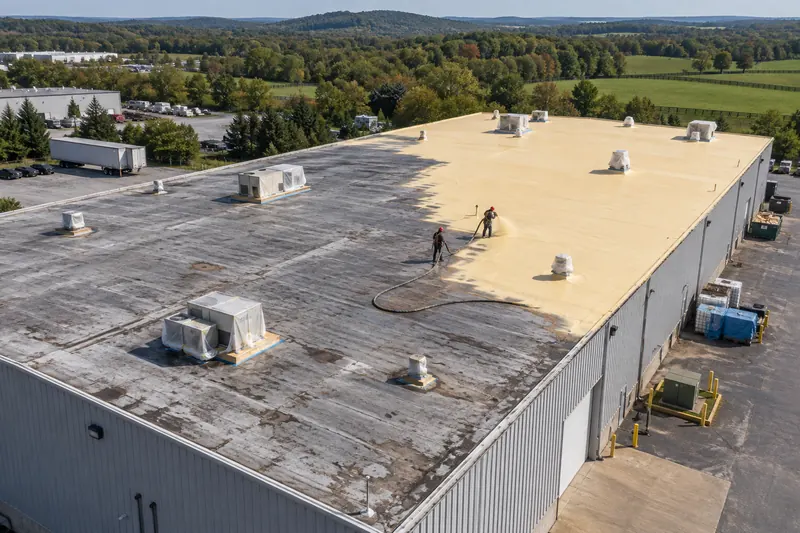
  • Drone view of a long warehouse roof with fresh tan foam covering about half the surface

    Tapered Foam Recover

    Long dry roofs that hold water in a few low areas get tapered foam over the existing surface, then a topcoat.

    • Slope built toward existing drains
    • Crickets behind wide curbs
    Commercial spray foam roofing details
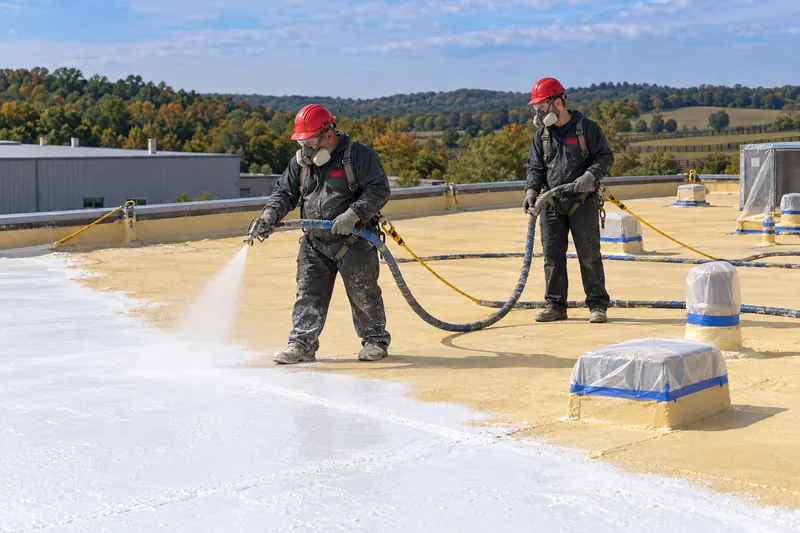
  • Roofer spraying white topcoat over cured tan foam while a second roofer watches the edge

    Silicone Over Slow-Draining Areas

    Parts of a roof where some water lingers after a storm get a silicone topcoat, which handles ponding better than acrylic.

    • Adhesion patch before the full coat
    • Granules on walk paths
    All of our foam roof services
  • Roofer measuring foam depth at a roof edge while a coworker records the reading

    Thickness Checks At Outlets

    Around each drain and scupper, foam depth is probed so the finished surface sits just above the outlet lip.

    • Readings recorded by location
    • Openings cleared after spraying
    Answers on drainage and coatings

Water Standing Days After It Rains?

Send a photo of where it sits and tell us the roof size. We can map the low areas on a roof walk.

(859) 204-7918

How We Reshape A Winchester Roof With Foam

Drainage work starts with knowing where water sits, so the roof lane leads and the building lane keeps the ground below protected.

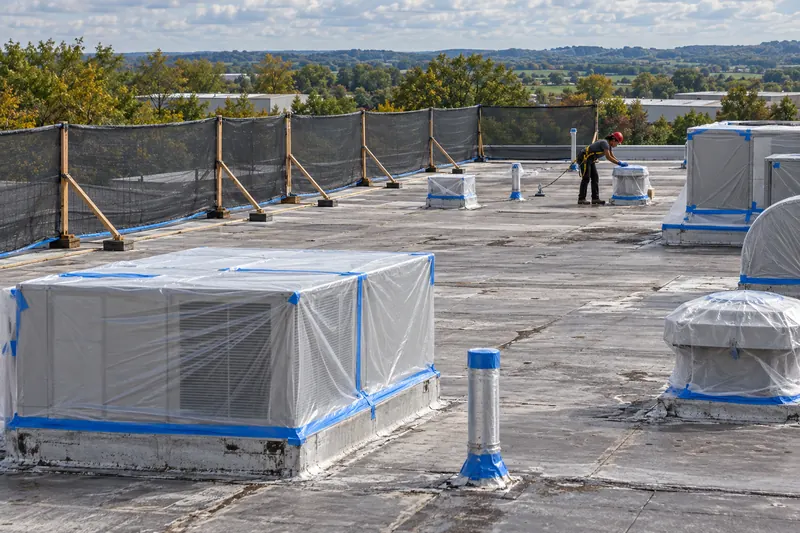
Roofer kneeling with a moisture meter on worn membrane while a plant manager takes notesRooftop units and vents wrapped in plastic and tape behind a braced wind screen before spraying
  1. On The Roof

    Step 1: Inspect Your Roof

    After a rain, we walk a Winchester roof to map where water stands, then take moisture readings and cores in those areas before planning any slope.

  2. Around The Building

    Step 2: Call Building Inspection

    Winchester's Building Inspection covers city and Clark County addresses. We ask whether the job counts as a recover or tear-off and whether new crickets change water at the drains.

  3. On The Roof

    Step 3: Lay Out The Slope

    High points, crickets, and outlet heights are marked on the roof in chalk so the spray crew knows where foam builds up and where it stays thin.

  4. Around The Building

    Step 4: Protect The Ground Below

    Downspouts and the walkways under scuppers are covered, and vehicles near the drip line move before spraying starts.

  5. On The Roof

    Step 5: Spray, Coat, And Water-Test

    Foam goes on to the planned slope, the topcoat follows, and a hose run at each mapped low area shows where water now heads.

Other Towns We Cover From Winchester

Mount Sterling is next down I-64; the others sit on the roads out of Lexington.

Winchester Spray Foam Roofing Questions

Permits, co-op power, and drainage questions from Clark County owners.

Which Electric Cooperative Is Based in Winchester?

Clark Energy Cooperative is headquartered in Winchester and serves Clark County plus parts of ten surrounding counties, including Bourbon, Fayette, and Montgomery. Before foam goes on, list every rooftop unit, exhaust fan, and conduit run, and keep the meter and service mast clear of overspray.

Can Foam Fix A Roof That Holds Water?

Foam can reshape the surface so water heads to an outlet, which a coating alone cannot do. It works when the drains and scuppers are clear and large enough. A low area with no outlet nearby needs a new drain or scupper first, and that is a separate job.

What Is A Cricket On A Flat Roof?

A cricket is a small raised ridge built behind a curb or between drains to split water and send it toward an outlet. On a foam roof we spray the cricket in place from the same foam, so there is no separate piece to flash or seal.

Why Does Water Stand At My Downtown Scuppers?

Most often the scupper opening sits above the roof surface, or debris has packed the scupper box. On brick buildings with through-wall scuppers, we clear the opening and set the foam height so the finished roof drains into it.

Plan A Drier Roof For Your Winchester Building

Tell us where water stands after a rain and how big the roof is.

Call Us (859) 204-7918