
Spray Foam Roofing FAQ

Spray Foam Roofing Questions From Lexington Owners

Answers to the spray foam roofing questions Lexington building owners ask most, from foam basics and Bluegrass weather to permits in each nearby town.

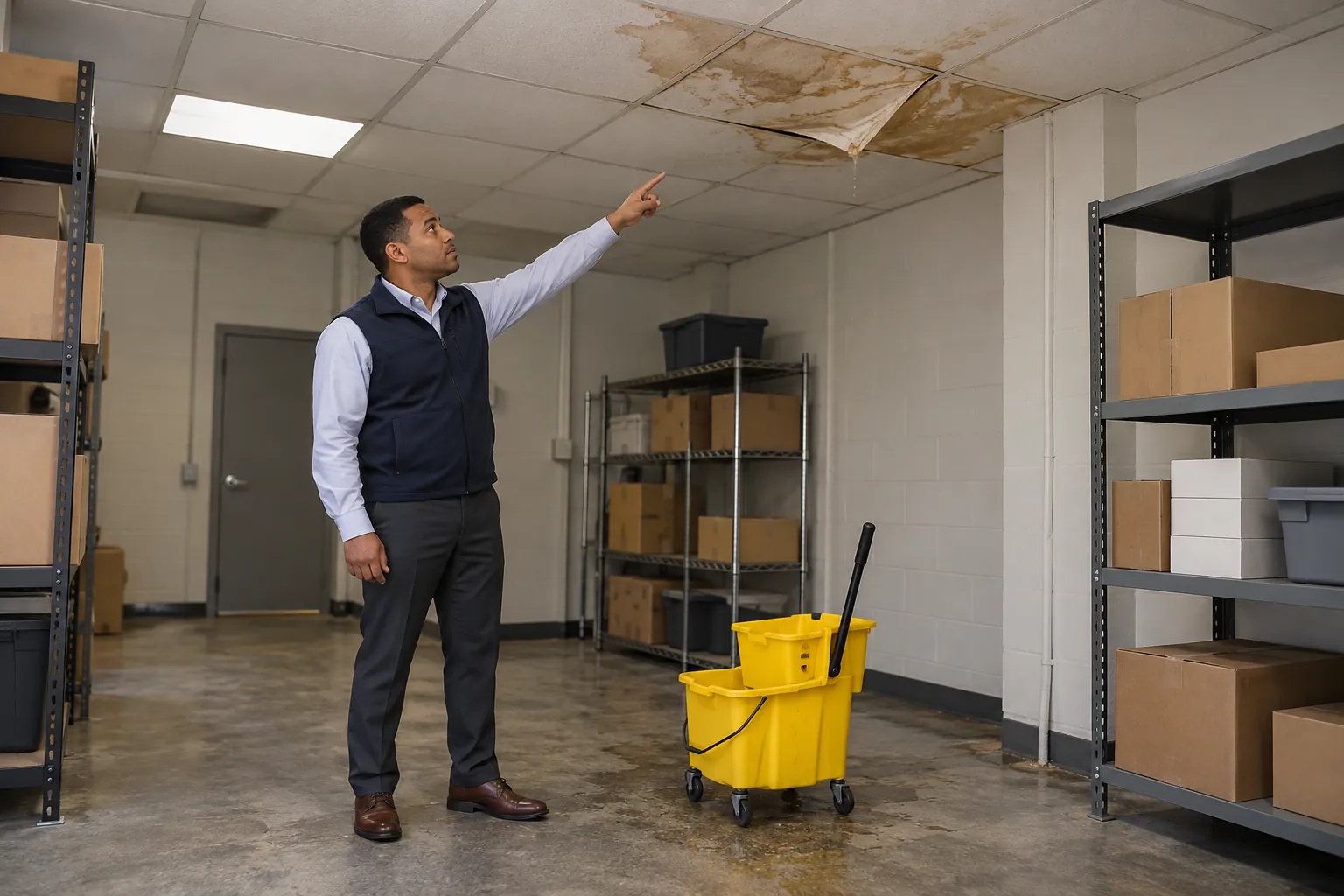
Operations manager pointing at stained, sagging ceiling tiles in a commercial back room

Answers By Topic

Spray foam roofing is a commercial roof system built by spraying liquid polyurethane foam over a roof deck or old roof, where it expands into one continuous insulating layer that is then sealed with an elastomeric coating. Lexington Spray Foam Roofing installs and recoats spray foam roofs on commercial buildings in Lexington, Fayette County, Kentucky, and nearby towns.

Spray Foam Roofing Basics

What Is a Spray Foam Roof Made Of?

A spray foam roof has two layers, closed-cell polyurethane foam and a protective coating on top. Crews mix two liquid components in a heated proportioner and spray the blend through a hose, and it rises into rigid foam within seconds. Passes are stacked until the foam reaches the thickness the slope and insulation plan calls for.

The coating is the part you see when you climb out of the roof hatch. It shields the foam from sunlight, gives the roof its color, and takes foot traffic. Crews often broadcast granules into the wet coating along walk paths to rooftop units so the surface is less slick.

How Is Closed-Cell Foam Different From Open-Cell Foam on a Roof?

Closed-cell foam is the type used as a roofing layer, because its cells stay sealed and shed water. Open-cell foam is a soft, light material meant for interior wall and ceiling cavities. A U.S. Department of Energy Building America guide compares the two.

  • Closed-cell: about R-6 per inch, roughly 2 pounds per cubic foot, and under 1 perm of vapor permeance at 2 inches thick.
  • Open-cell: about R-3.6 per inch, roughly half a pound per cubic foot, and open to water vapor.

Press a thumb into cured roofing foam at a parapet edge and it barely gives. Open-cell foam would crush under the same pressure and soak up rain.

Why Do Building Owners Choose Spray Foam Over Other Flat Roof Systems?

Owners pick spray foam mainly because it forms one continuous layer with no seams and adds insulation in the same pass. Seams and fastener rows are where many single-ply and metal roofs start to leak. Foam is sprayed up curbs, around pipe penetrations, and onto parapet walls, so those transitions become part of one monolithic surface.

The foam is also light. That matters on older Bluegrass warehouses and barns where the framing was never sized for a heavy second roof. A structural check still comes first whenever the existing roof stays in place.

Does Spray Foam Stop Air Leaks Through the Roof?

Yes, closed-cell spray foam works as an air barrier once it covers the roof in an unbroken layer. The Building America guide explains that air and gases stay trapped inside each sealed cell instead of moving through the material.

On a metal building, the foam seals gaps at panel laps, ridge caps, and eave closures from above. On a built-up roof, it bridges cracked base flashing at the wall line. Fewer drafts at the roof deck help conditioned space hold temperature, though real results depend on the building, its equipment, and how the space is used.

Is My Building a Good Fit

Can Spray Foam Go Over My Existing Roof?

Often it can, provided the existing roof is dry, firmly attached, and the structure can carry the added weight. Wet insulation has to come out first. A crew checks with core cuts and a moisture meter, then marks wet areas around drains and along low edges where water has sat.

Loose gravel is vacuumed off, blisters in built-up roofing are cut out, and rusted metal panels are cleaned and primed. Building code limits on how many roof layers can stack on one deck also apply, so the local permit office should weigh in before work starts.

Which Commercial Buildings in Central Kentucky Get the Most From Spray Foam?

Low-slope buildings crowded with rooftop units, vents, and odd angles get the most out of spray foam. Each penetration is a seam on other systems, while foam wraps them in one pass.

  • Metal warehouses and shop buildings with leaking panel laps and backed-out fasteners.
  • Retail strips and offices with aging built-up roofs and slow interior drains.
  • Barns and agricultural buildings with metal roofs that drip condensation in cold weather.
  • Schools, churches, and gyms with wide spans and many curbs and skylights.

Steep roofs and decks with deep structural sag call for other approaches.

How Does Spray Foam Compare With TPO or a Metal Retrofit?

Spray foam, TPO, and metal retrofit panels can all go over many existing low-slope roofs, and they differ most in seams, insulation, and how they handle penetrations.

FactorSpray foam (SPF)TPO single-plyMetal retrofit
SeamsNone, one sprayed layerHeat-welded seams at each sheet lapPanel laps and fasteners
InsulationBuilt in, about R-6 per inchSeparate boards under the sheetAdded with new framing
Curbs and pipesFoam sprayed up and aroundBoots and hand-welded flashingCustom curb flashing
Slope to drainsFoam tapered in placeTapered boardsFraming sets new pitch
UpkeepPeriodic recoat of the topcoatSeam and flashing checksFastener and sealant checks

Spray foam leads on roofs with many curbs or irregular shapes. TPO and metal retrofits make sense when the deck needs heavy repair or the owner prefers a factory-made sheet. A wet or rusted-through deck changes the plan for every option, so core cuts come first.

Climate and Weather in the Bluegrass

How Much Rain Does Lexington Get, and Why Does It Matter for a Foam Roof?

Lexington receives close to 50 inches of precipitation in an average year, so drainage comes up on almost every roof walk. The National Weather Service office in Louisville, which covers Lexington, recorded 49.98 inches there in 2024 (2024 annual summary), very near the station's normal.

Water that sits for days leaves a ponding ring of dirt on the coating and wears the topcoat faster. Spray foam helps because crews can build extra thickness around low spots and taper it toward drains and scuppers. That only works when the drain bowls and scupper openings themselves are clear and sized right.

Does Freeze-Thaw Cycling in Kentucky Damage Spray Foam?

Intact closed-cell foam handles freeze-thaw well because very little water gets into it. Trouble starts when the coating wears thin, or when bird pecks and cracks open the foam surface and let water in. Water that freezes inside damaged foam widens the hole over a winter.

Lexington weather swings hard. NWS Louisville noted a low of minus 7 degrees on January 21, 2024, then a high of 64 four days later. A spring check of coating cracks at parapets and around drain bowls catches this kind of damage early.

How Do Hail and Severe Storms Affect a Spray Foam Roof?

Hail usually leaves small dents, called hail pocks, in the coating and foam, and most can be sealed during routine repair. Firm closed-cell foam absorbs impact instead of shattering. The key question is whether the coating split at the dent, since a split exposes foam to sunlight and water.

Central Kentucky sees spring and summer thunderstorms with wind and hail, and NWS Louisville issues the warnings for Fayette County. After a storm, look for dents, lifted edge metal, and debris piled against curbs, and have a crew photograph the damage before repairs.

Installation and Disruption

Can a Business Stay Open While the Roof Is Sprayed?

Most buildings stay open during a spray foam installation, with planning around air intakes and doors. Fumes from foam and coating can be pulled indoors through rooftop units, so crews shut down or cover intakes near the work zone for set periods. Staging is laid out around loading docks, entrances, and parking.

Overspray is the other concern. Wind carries fine droplets onto cars, windows, and nearby roofs, so crews watch wind speed, hang screens, and ask that vehicles move from the downwind side. Tenants should get the schedule ahead of time, section by section.

What Weather Conditions Are Needed to Spray Foam?

Spray foam needs a dry roof surface, moderate temperatures, and light wind. Each manufacturer publishes limits for surface temperature, humidity, and the spread between surface temperature and dew point, and crews follow that product data sheet on the day of work.

Morning dew on metal panels is a common delay in central Kentucky during spring and fall. Foam sprayed onto damp metal bonds poorly and can blister later. Crews wait for the panels to dry, check them with a surface thermometer, and stop spraying when gusts pick up.

How Long Does a Spray Foam Roof Installation Take?

The schedule hinges more on roof size, prep work, and weather than on spray time. Foam goes on quickly once the surface is ready. Most of the calendar goes to removing wet sections, cleaning, priming rusty metal, and masking edges, skylights, and rooftop equipment.

Coatings then need cure time between coats, and rain or heavy dew stops the work. A small retail roof with clean metal moves faster than a large warehouse with dozens of curbs, drains, and wet areas to replace. Spring and fall weather windows fill up first.

Coatings, Maintenance and Recoating

Why Does Spray Foam Need a Coating?

Exposed polyurethane foam breaks down in sunlight, so every spray foam roof needs a UV-protective coating. Uncoated foam turns from tan to orange to dark brown and gets powdery. That crumbling surface then holds water and erodes in wind.

The coating also carries foot traffic, sheds water, and gives the roof its color. A white topcoat reflects more sun than a gray one. Spots where bare foam shows through, often near walk paths, curbs, and ladder landings, need fresh coating soon.

Which Coatings Are Used Over Spray Foam?

Silicone, acrylic, and urethane are the three main coating families for spray foam roofs, and each handles water, traffic, and weather differently.

CoatingStrengthWatch-outCommon fit
SiliconeHolds up under ponding water and UVCollects dirt; mostly only silicone sticks to it laterFlat roofs with slow drains
AcrylicBright white, water-basedWeak under standing water; needs a warm, dry cureWell-sloped roofs with clear scuppers
UrethaneTough against foot traffic and impactSolvent odor during applicationWalk paths and equipment areas

The right pick comes down to drainage, traffic, and what is already on the roof. A roof first coated in silicone usually gets silicone again at recoat time. A small adhesion test patch confirms the new coat will bond before the full roof is coated.

How Often Does a Spray Foam Roof Need Recoating?

Recoating is due once the topcoat has worn thin, and that timing varies from roof to roof. Coating thickness, sun exposure, traffic, and ponding all change the timeline. Crews measure dry film thickness with a gauge and look for coating chalking, a white residue that rubs off on a fingertip, plus bare foam at edges.

When the foam beneath is dry and firm, a recoat means cleaning, fixing small damage, and applying new coating over the old. That renews the surface while the insulation stays put. Waiting until foam is exposed and weathered turns a recoat into a repair job.

Should a Damaged Foam Roof Be Repaired, Recoated, or Replaced?

That choice turns on how much of the foam is wet or damaged, which a moisture survey and core cuts reveal.

Condition foundUsual approach
Isolated bird pecks, hail pocks, or small foam blistersSpot repair with foam and coating
Worn or chalking topcoat over dry foamClean and recoat
Wet foam in limited areas around drains or curbsCut out, refoam, and recoat those areas
Widespread wet foam or poor bond to the deckRemove and replace the system

Spot repairs keep small problems from spreading under the coating. Full replacement comes into play when water has moved through large sections or the foam has pulled loose from the deck. Wet foam often looks normal from the surface, so readings near drains and curbs matter.

More Spray Foam Roofing Questions About A Lexington Roof?

Call and tell us where the water shows inside and what the roof is made of, and we will answer on the phone or set up a roof walk.

(859) 204-7918

Cost, Value and Taxes

What Drives the Cost of a Spray Foam Roof in Lexington?

Square footage, foam thickness, and prep work drive most of the cost of a spray foam roof. Thicker foam adds insulation and slope but uses more material. Prep is the part that varies most between buildings.

  • Wet insulation to remove around drains and low spots.
  • Rusted fasteners and panel laps that need cleaning and primer.
  • Penetration count, meaning curbs, skylights, and pipes to detail.
  • Coating type and the film thickness specified.
  • Access needs, such as lift rental, crane picks, or tight parking.

Pricing follows a roof walk, measurements, and moisture checks.

Can a Spray Foam Roof Qualify for Section 179?

Yes, a new roof on an existing nonresidential building can count as qualified real property under Section 179. IRS Publication 946 lists roofs among the improvements to nonresidential real property that qualify when placed in service after the building itself was first placed in service.

For tax years beginning in 2026, the maximum Section 179 deduction is $2,560,000, reduced once qualifying purchases pass $4,090,000. Residential rental buildings fall outside this rule. Whether to expense new foam and coating on a warehouse deck is a call for your CPA, who knows the building's tax history.

Does Spray Foam Lower Energy Bills?

Spray foam adds continuous insulation and air sealing at the roof deck, which cuts heat flow through the roof. How much that shows up on a bill depends on existing insulation, HVAC equipment, and hours of use.

A metal shop with bare panels and daylight showing at the panel laps has more to gain than an office with a thick insulated roof.

Kentucky Utilities, Blue Grass Energy, and Clark Energy all serve parts of the region. LG&E and KU have announced peak-time incentives that include small businesses, so ask your own utility which business programs are current before counting on any of them.

Permits, Codes and Utilities

Town pages: Nicholasville · Winchester · Paris · Mount Sterling · Cynthiana · Wilmore. Or see all towns we serve.

Who Issues Permits for Commercial Roof Work Around Lexington?

Permit offices around Lexington vary by town and county. Lexington uses the LFUCG Division of Building Inspection, while nearby counties rely on a local inspector or send commercial work to the state.

TownCountyBuilding permit contact
LexingtonFayetteLFUCG Division of Building Inspection
NicholasvilleJessamineJessamine County local building inspector
WilmoreJessamineJessamine County local building inspector
WinchesterClarkBuilding Inspection, City of Winchester and Clark County
ParisBourbonLocal inspector for City of Paris and Bourbon County
Mount SterlingMontgomeryKentucky Dept. of Housing, Buildings and Construction
CynthianaHarrisonHarrison County local building inspector

Call ahead and ask if a recover or tear-off at the parapet and edge metal needs a permit at that address. Have the roof size, existing roof type, and planned foam thickness ready for that call.

Which Building Code Applies to a Commercial Roof in Kentucky?

The Kentucky Building Code applies to commercial roofs statewide, including in Lexington, and the state Department of Housing, Buildings and Construction maintains it. LFUCG checks commercial work against both that code and its own zoning ordinance.

For spray foam, code questions usually center on the fire rating of the foam and coating assembly, limits on recovering an existing roof, and edge details at parapets and gutters. Manufacturers publish tested assemblies, and crews match the product and thickness to the listing.

Questions by Town

Do Lexington's Historic Districts Require Approval for Roof Work?

Yes, exterior changes in Lexington's H-1 historic overlay districts need a Certificate of Appropriateness before work begins. The city has 15 historic districts. Staff can sign off on minor changes, while larger ones go to the Board of Architectural Review, which meets twice a month.

A low-slope roof hidden behind a parapet on a downtown storefront is often out of sight from the street. Changes that alter the visible roofline, parapet caps, or cornice flashing draw more attention. Check with LFUCG historic preservation staff before ordering materials.

Is Spray Foam a Good Fit for Barns and Farm Buildings in Fayette County?

Spray foam works well on many metal-roofed barns, arenas, and equipment buildings outside Lexington's urban area. Fayette County's Purchase of Development Rights program has protected more than 33,000 acres of farmland, so agricultural roofs remain common across the county.

Metal barn roofs drip condensation in cold weather and rust at the fasteners. Foam sprayed on the outside seals the panel laps and keeps the underside warmer, which cuts dripping. Horses and other livestock should be moved out of the barn during spraying, with doors and vents opened before they return.

Who Handles Commercial Roof Permits in Nicholasville?

Nicholasville building work falls under Jessamine County, and the state building directory lists a Jessamine County local building inspector plus an assigned state building inspector. Jessamine County posts its commercial building permit application online.

Have your roof plan ready when you apply. Inspectors want to know if the old membrane stays, how much foam goes on, and whether tapered foam will change water flow at scuppers or gutters. Changes to edge metal and new roof drains are the details most likely to prompt questions.

Who Supplies Power to Nicholasville Businesses, and Does It Affect Roof Work?

Blue Grass Energy, an electric cooperative headquartered in Nicholasville, serves Jessamine County along with many surrounding counties. Some Nicholasville properties are served by other providers, so check the electric bill.

Utility details matter on a roof job because rooftop units must be shut off at their disconnects while foam is sprayed near the intakes. Coordinate with your HVAC service company so units come back on after the coating sets. Ask Blue Grass Energy directly about any current business energy programs.

Does Winchester Require a Permit for Commercial Roof Work?

Winchester's Building Inspection department issues building permits for structures of 200 square feet or larger in the City of Winchester and all of Clark County, and it reviews plans. One office covers both city and county addresses.

The department's page does not spell out reroof rules, so call before work starts. Mention whether the job is a recover over the existing roof or a tear-off, and whether new crickets or tapered foam will redirect water at the drains. Older downtown buildings with brick parapets and through-wall scuppers deserve extra detail.

Which Electric Cooperative Is Based in Winchester?

Clark Energy Cooperative is headquartered in Winchester and serves Clark County plus parts of Bath, Bourbon, Estill, Fayette, Madison, Menifee, Montgomery, Morgan, Powell, and Rowan counties. Many commercial and farm buildings around Winchester buy power from it.

Before a foam roof goes on, list every rooftop unit, exhaust fan, and conduit run, since each one gets masked, raised, or detailed. Clark Energy members can ask the co-op about current business programs. Keep the meter and service mast clear of overspray during work.

Who Inspects Commercial Roof Work in Paris, Kentucky?

Paris and Bourbon County share one local building inspector, listed by the state as covering the City of Paris and the county. A state building inspector is also assigned to Bourbon County.

Bourbon County roofs range from downtown brick storefronts to metal barns and equipment sheds on farmland. Ask the inspector if your project needs a permit, especially when foam will raise the roof at the parapet, cover old skylights, or reroute water at gutters.

Which Utility Serves a Commercial Building in Bourbon County?

Bourbon County sits inside the service areas of both Blue Grass Energy and Clark Energy, so the answer turns on the property's exact location. Check the account name on your electric bill before asking about business programs.

On a farm property with several metal buildings, the co-op serving one barn can differ from the one serving the shop down the lane. Foam work near service drops and roof-mounted conduit needs clear marking, and the crew should keep spray rigs clear of overhead lines when parking.

Where Do Mount Sterling Businesses Get a Commercial Roof Permit?

Montgomery County lists no local building inspector in the state directory, which directs commercial construction to the Kentucky Department of Housing, Buildings and Construction. A state building inspector is assigned to the county.

That means Mount Sterling owners should contact the state office early about commercial roof work. Have roof dimensions, the existing roof type, foam thickness, and any changes to drains, scuppers, or edge metal on hand. Electrical permits run through the county judge executive's office or the city office where the work takes place.

What Should Mount Sterling Owners Know Before Foaming a Metal Roof?

Mount Sterling owners in Clark Energy territory should map rooftop equipment and confirm electrical shutoffs before foam work starts. Clark Energy lists Montgomery County in its service area, and other providers serve parts of the county too.

Older metal shops and warehouses often show rust bloom at fastener heads and end laps. Crews wire-brush or power-wash those spots, apply a rust-inhibiting primer, and then spray foam over the full surface. Skipping primer on rusty laps leads to blistering foam within a few seasons.

Who Inspects Commercial Building Work in Cynthiana?

Harrison County has a local building inspector, listed by the state with a county planning office contact. A state building inspector is also assigned to the county, and electrical inspections go through the county judge executive's office or the city office where work is done.

Call the Harrison County office with your address in Cynthiana to confirm the permit path. Bring the scope, including foam thickness, coating type, and any new roof drains or raised parapet caps.

Can Spray Foam Go Over an Older Brick Commercial Building in Cynthiana?

Yes, if the deck is dry and the parapet walls are in good shape. Many older commercial buildings have low roofs behind brick parapets, with through-wall scuppers and metal coping on top. Foam can be sprayed up the inside face of the parapet and under the coping, sealing the joint where most leaks start.

Blue Grass Energy lists Harrison County in its service area, so owners there can ask about current programs. Crumbling mortar or loose coping has to be fixed by a mason before foam goes on.

Do Wilmore Properties Follow the Same Permit Path as Nicholasville?

Wilmore is also in Jessamine County, so the county's listed local building inspector and assigned state inspector apply. Local electrical inspection runs through the county judge executive's office or the city office where the work happens, so call Wilmore's city office for that step.

Confirm zoning with the city before changing anything visible, such as raising the roof edge with thicker foam or replacing gutters and downspouts. Smaller towns tend to have fewer staff, so leave extra time between application and start.

How Does Spray Foam Work on School and Church Buildings in Wilmore?

Spray foam suits institutional buildings well because it wraps the many curbs, vents, and skylights these roofs carry. In a small town like Wilmore, churches, schools, and other institutional buildings often have wide low-slope roofs over gyms and halls.

Scheduling matters more than on a warehouse. Work around services, classes, and events, and keep fumes away from fresh air intakes over occupied rooms. Summer breaks give the longest open window, and crews mark walk paths with granules so maintenance staff can reach rooftop units safely.

Getting Started

What Should I Gather Before a Roof Inspection?

Gather the roof's age, past repair records, and a list of where leaks show up inside. Those details tell a crew where to cut cores and check moisture first.

  • Leak locations marked on a floor plan or photos of ceiling stains.
  • Repair records and the original roof type, if known.
  • Drawings of the building, especially deck type and drain layout.
  • Access details for the roof hatch, ladder, or lift area.
  • Equipment list for rooftop units, exhaust fans, and solar or antenna mounts.

Owners who have this ready make the roof walk faster and more useful.

What Happens During a Spray Foam Roof Inspection?

A spray foam roof inspection is a walk of the entire roof surface with moisture checks, photos, and notes on each drain, curb, and edge. Crews look at flashing, parapet caps, scuppers, and skylights, then take small core samples where readings show moisture.

On an existing foam roof, they check coating thickness, chalking, foam blisters, and bird damage. The findings decide between spot repair, recoat, partial refoam, or full replacement. Lexington Spray Foam Roofing then walks the owner through the photos so the decision is clear.

Still Have A Roof Question?

Call us, or send the roof details for a free estimate.

Call Us (859) 204-7918