Commercial Spray Foam Roofing

Lexington Spray Foam Roofing For Commercial Buildings

We handle spray foam roofing for commercial buildings across Lexington: a moisture check, closed-cell foam sprayed over the old roof, and a protective topcoat.

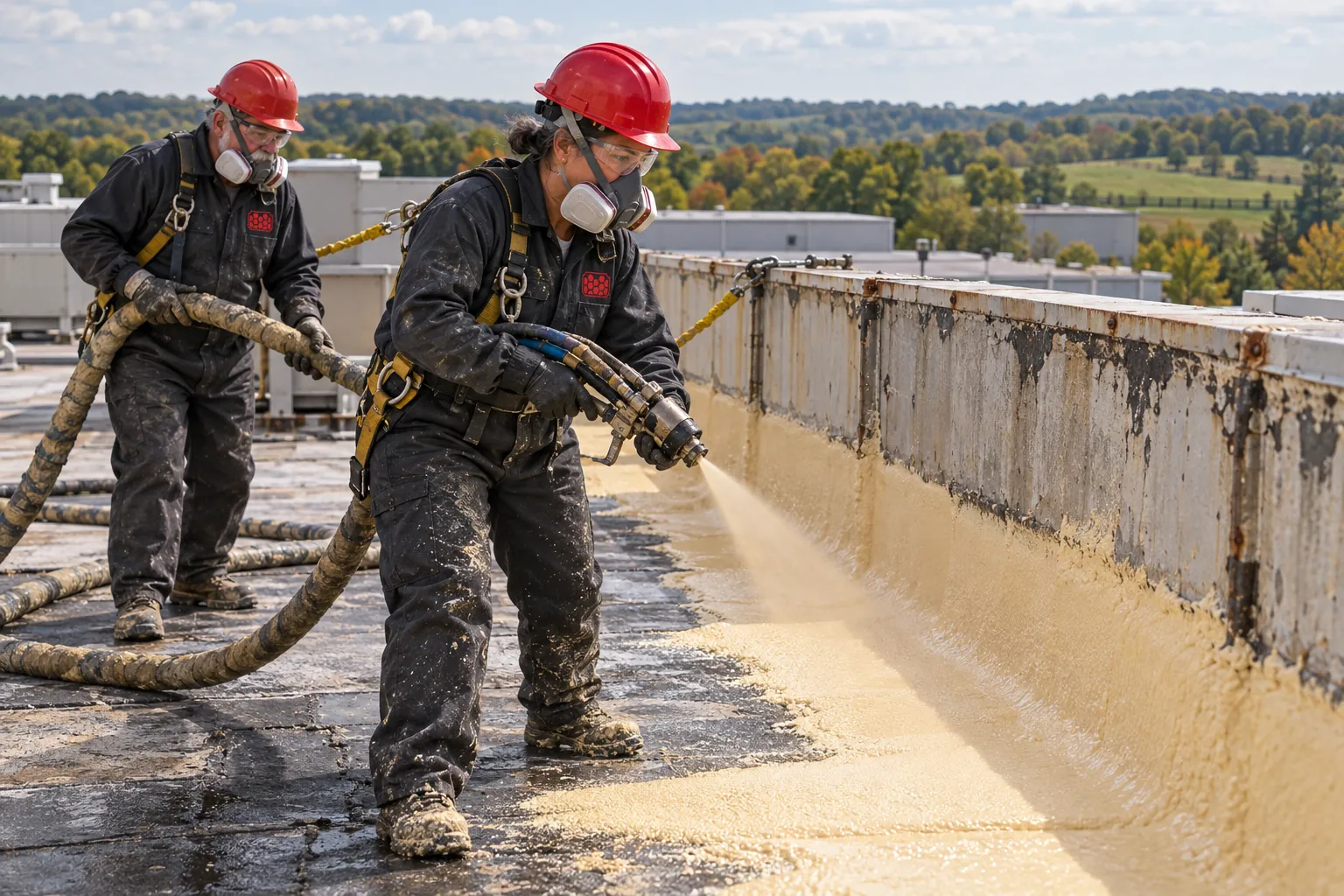
Two roofers in respirators spraying tan foam up a parapet wall on a commercial flat roof
  • Moisture Check FirstCore cuts before any foam
  • Foam Plus TopcoatClosed-cell foam, coated finish
  • Commercial Roofs OnlyShops, warehouses, retail, schools
  • Lexington And Six TownsFive neighboring counties

Spray Foam Roofing In Lexington, Layer By Layer

One service, start to finish: we prepare the old roof, spray closed-cell foam over it, and seal the foam with a coating that takes sun and foot traffic.

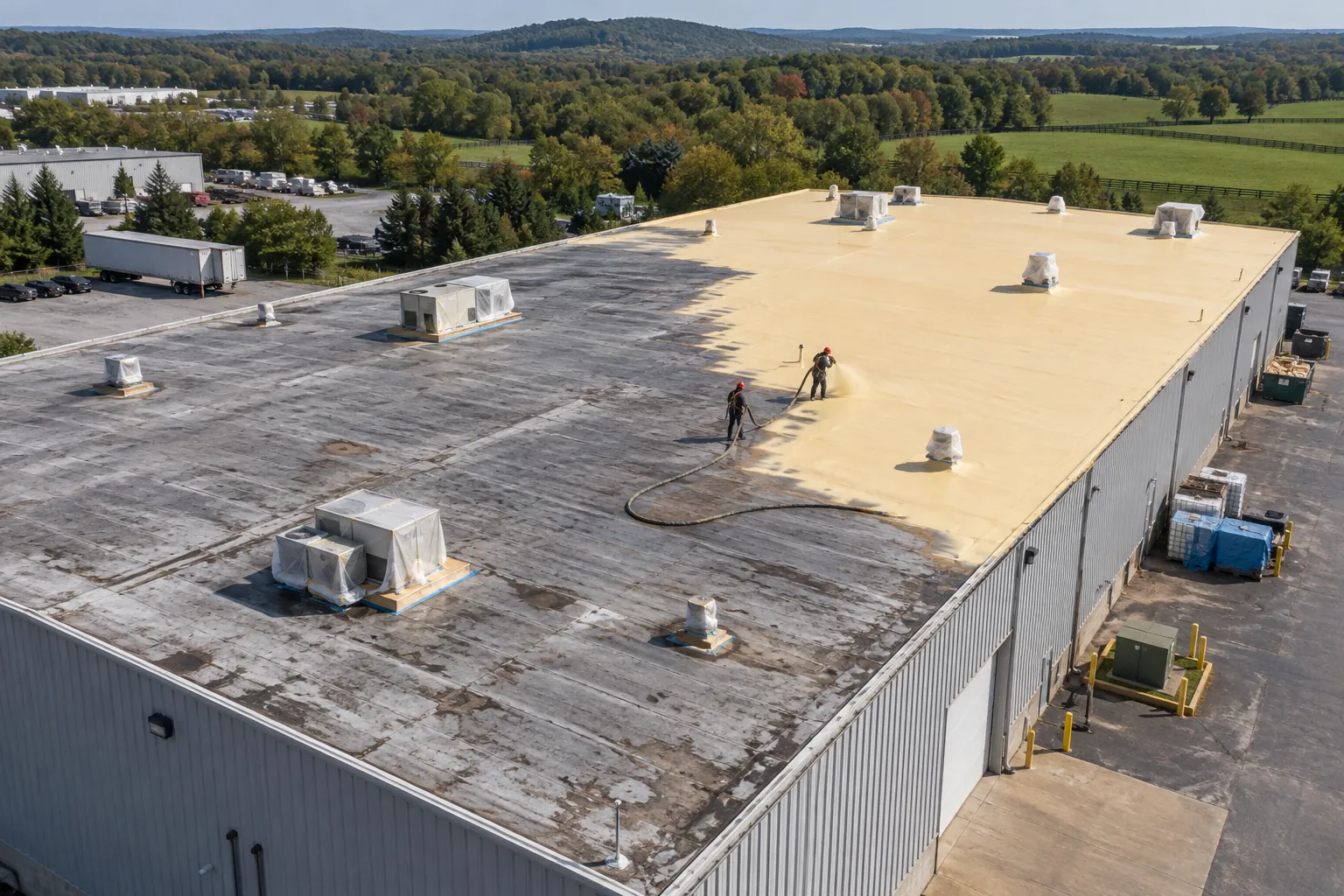
Drone view of a long warehouse roof with fresh tan foam covering about half the surface

Commercial Spray Foam Roofing

  1. Elastomeric TopcoatSilicone, acrylic, or urethane
  2. Closed-Cell Polyurethane FoamAbout R-6 per inch
  3. Existing Roof, Dried And CleanedBuilt-up, single-ply, or metal
  4. Roof DeckSteel, wood, or concrete

Foam fits low-slope and metal roofs crowded with rooftop units, pipes, and odd angles, because every curb and lap gets sprayed into the same layer. Dry, well-attached roofs stay in place underneath.

Best For

  • Metal shops with leaking panel laps
  • Built-up roofs with slow interior drains
  • Roofs with many curbs and skylights

Check First

  • Wet insulation found by core cuts
  • Framing capacity for an added layer
  • Layer limits at the permit office
Commercial spray foam roofing in Lexington, step by step

Roof Problems We Mark Before Spraying

These are the spots we circle on a roof plan during the first walk. Each one changes the prep work or the foam thickness.

Warehouse roof plan sketch with five numbered problem areas12345
Sketch of a warehouse roof plan, drawn for illustration.
  1. Slow Interior Drains

    Silt and gravel collect in the drain bowl, and the roof around it holds water for days. We clear the bowl and plan extra foam to taper water toward it.

  2. Rooftop Unit Curbs

    Cracked base flashing at an HVAC curb lets water run under the old membrane. Foam is sprayed up the curb sides so that joint stops being a seam.

  3. Ponding Rings

    A ring of dirt marks where water sat after the last storm. Low areas like this get built up with foam before the topcoat goes on.

  4. Skylight Frames

    Old skylight curbs leak at the corners where the flashing was lapped. We clean the frame, mask the lens, and wrap the curb in foam.

  5. Wet Insulation

    Soft spots underfoot often mean the board under the membrane has soaked up water. Core cuts and a moisture meter show how far it spreads, and wet board comes out.

What Foam And A Topcoat Fix On An Older Roof

Owners choose spray foam to stop specific failures. Here is what each common one looks like and how the foam system handles it.

  • Open Panel Laps And Seams

    Lap screws back out and sealant dries, so wind-driven rain gets under each lap on a metal roof.

    What Foam And Coating Do

    Foam covers every lap and fastener row in one sprayed layer, so those joints are sealed from above instead of caulked one at a time.

  • Water That Sits For Days

    Low spots near drains hold rain long after a storm, and the old membrane wears fastest there.

    What Foam And Coating Do

    Crews build foam thickness at low areas and taper it toward drains and scuppers, which moves water off sooner when the drains themselves are clear.

  • Leaks At Curbs And Pipes

    Every pipe boot and HVAC curb is a hand-made flashing on most flat roofs, and each one ages on its own schedule.

    What Foam And Coating Do

    Foam is sprayed up and around each curb and pipe, tying those details into the same surface as the rest of the roof.

  • A Hot Top Floor

    Bare metal panels and thin insulation pass summer heat straight into the space below.

    What Foam And Coating Do

    Closed-cell foam adds about R-6 per inch, and a white topcoat reflects more sun than a gray one. Bill results depend on the building and its equipment.

Water Coming Through The Ceiling?

Call and tell us where the stain is, how old the roof is, and whether it is metal or flat. We will set up a roof walk from there.

(859) 204-7918

Is Your Roof Ready For Spray Foam?

Most fit questions come down to moisture, attachment, and structure. These two lists show where foam goes straight on and where repair work comes first.

Ready For Foam

  • Dry insulation under a built-up or single-ply membrane
  • Metal panels still firmly fastened, with surface rust only
  • Low-slope roofs with many curbs, vents, and skylights
  • Framing that can carry a lightweight added layer
  • Owners who want insulation added without a tear-off

Repair Or Remove First

  • Soaked insulation around drains and along low edges
  • Rust-through panels or a deck that sags between joists
  • Blistered built-up roofing and loose gravel
  • Crumbling parapet mortar or loose coping stones
  • Steep roofs, which call for other systems
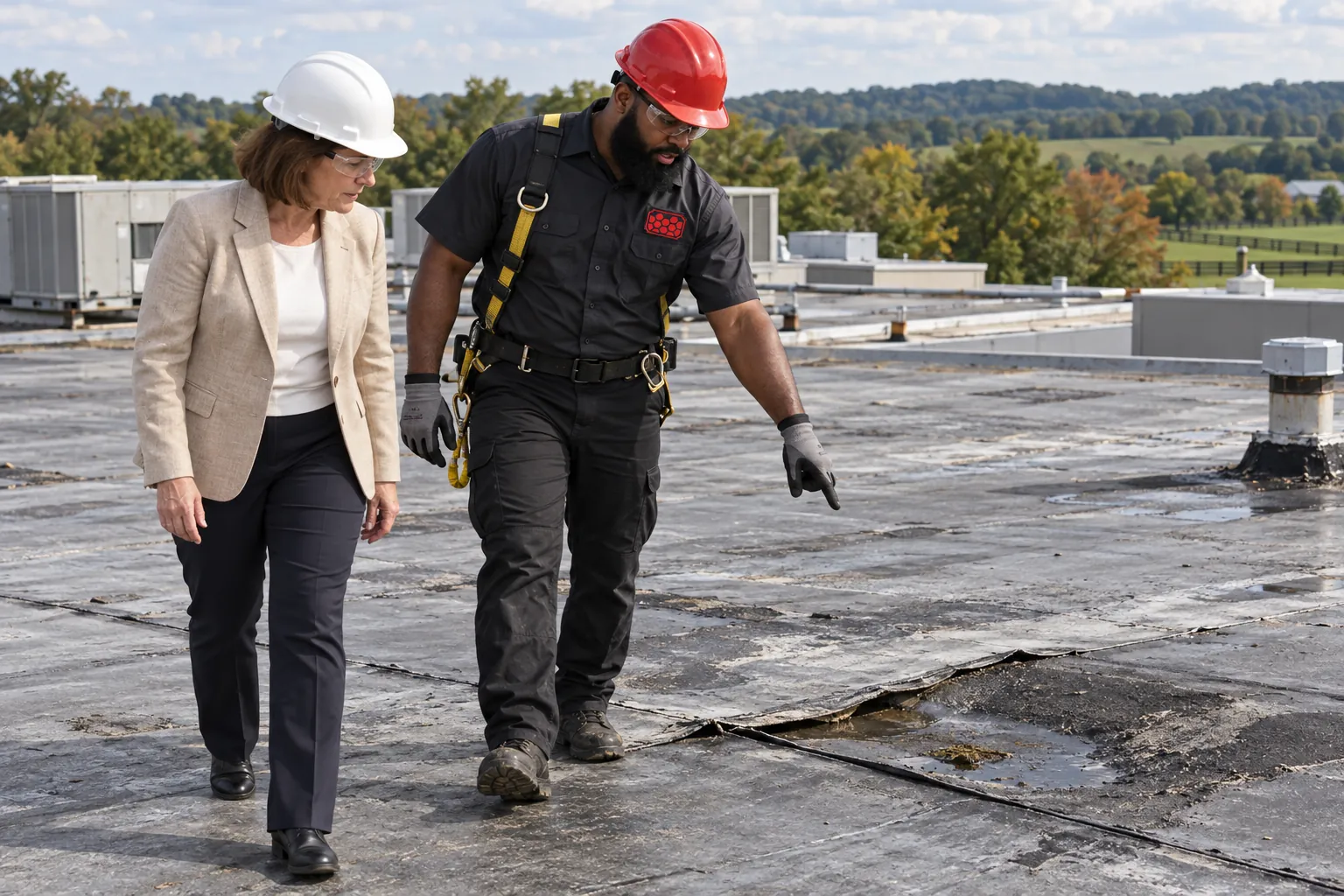
Roofer pointing out open seams on an aged flat roof while walking it with a building owner

How A Spray Foam Roof Goes On

The work runs in two lanes: what happens on the roof, and what we coordinate around the building so tenants and equipment stay safe.

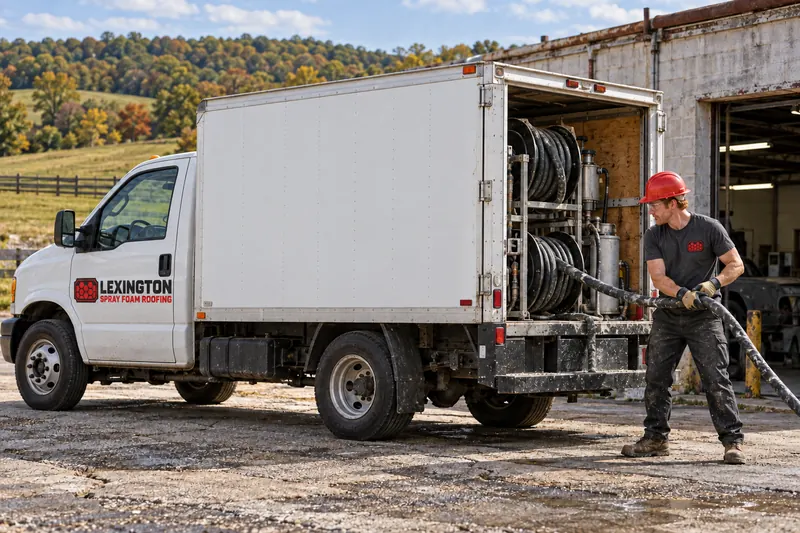
Roofer kneeling with a moisture meter on worn membrane while a plant manager takes notesSpray foam rig truck with hose reels open beside a block commercial shop as a roofer pulls hose
  1. On The Roof

    Step 1: Inspect Your Roof

    We walk the full roof with a moisture meter, cut small cores where readings jump, and photograph every drain, curb, and edge so the plan starts from facts.

  2. Around The Building

    Step 2: Plan Around The Building

    Tenants get the schedule section by section. We mark which rooftop units shut down, which doors stay open, and where cars should move off the downwind side.

  3. On The Roof

    Step 3: Prepare The Surface

    Wet sections come out, gravel is vacuumed, blisters are cut, and rusty laps are cleaned and primed. Edges, skylights, and units are masked before spraying.

  4. On The Roof

    Step 4: Spray And Coat The Foam

    Foam goes on in passes to the planned thickness, built up at low spots, then sealed with a silicone, acrylic, or urethane topcoat once it cures.

  5. Around The Building

    Step 5: Hand The Building Back

    Covered intakes are opened, units restart with your HVAC company, and you get the thickness readings and photos from each sprayed section.

Where We Spray Foam Roofs Around Lexington

Lexington sits at the hub of three roads we drive to every job: US 27 north, I-64 east, and US 27 south.

Service area map around Lexington, Kentucky: US 27 north to Paris and Cynthiana, I-64 east to Winchester and Mount Sterling, US 27 south to Nicholasville, with Wilmore on a short spur. Not to scale.US 27I-64US 27LEXINGTON1Paris2Cynthiana3Winchester4Mount Sterling5Nicholasville6WilmoreNNot to scale

North On US 27

  • ParisParis and Bourbon County share one inspectorDowntown storefronts plus the metal barns and sheds on surrounding farms.
  • CynthianaHarrison County building inspectorOlder brick buildings with low roofs behind parapets.

East On I-64

  • WinchesterBuilding Inspection for the city and Clark CountyLong roofs where tapered foam steers water to drains.
  • Mount SterlingState review through Housing, Buildings and ConstructionOlder metal shops with rust at fastener heads and end laps.

South On US 27

  • NicholasvilleJessamine County building inspectorRetail and office roofs full of rooftop units.
  • WilmoreJessamine County building inspectorChurch, school, and gym roofs timed around their calendars.

Questions Lexington Owners Ask About Foam Roofs

Straight answers on fit, weather, cost, and the first roof walk.

How Much Rain Does Lexington Get, and Why Does It Matter for a Foam Roof?

Close to 50 inches in a typical year. The National Weather Service recorded 49.98 inches in Lexington in 2024, near the station's normal.

That much rain finds every low spot, so we taper foam toward drains and scuppers and build up the areas that hold water. Tapering only helps when the drain bowls themselves are clear and sized right.

What Drives the Cost of a Spray Foam Roof in Lexington?

Square footage, foam thickness, and prep work drive most of it. Prep varies the most from building to building: wet insulation to remove, rusty laps to prime, and every curb, skylight, and pipe to detail.

Coating type, film thickness, and access needs such as a lift or tight parking also count. A price follows a roof walk, measurements, and moisture checks.

What Happens During a Spray Foam Roof Inspection?

We walk the entire roof with a moisture meter, photograph each drain, curb, and edge, and take small cores where readings show water. On an existing foam roof we also measure coating thickness and look for chalking, blisters, and bird pecks.

Then we go through the photos with you and lay out the choice: spot repair, recoat, partial refoam, or replacement.

Do You Work on Roofs Outside Lexington?

Yes. Besides Lexington, we spray foam roofs in Nicholasville, Wilmore, Winchester, Mount Sterling, Paris, and Cynthiana. Each town has its own permit office, and Montgomery County sends commercial work to the state, so we sort that out before scheduling.

Town-by-town permit and utility answers are in our spray foam roofing FAQ.

Get Your Lexington Roof Measured For Foam

Send the roof size and a few details, or call and talk it through.

Call Us (859) 204-7918