
Foam Over Metal And Flat Roofs

Lexington Commercial Spray Foam Roofing

Commercial spray foam roofing in Lexington: we cut out wet sections, spray closed-cell foam over metal or flat roofs, and coat it for sun and foot traffic.

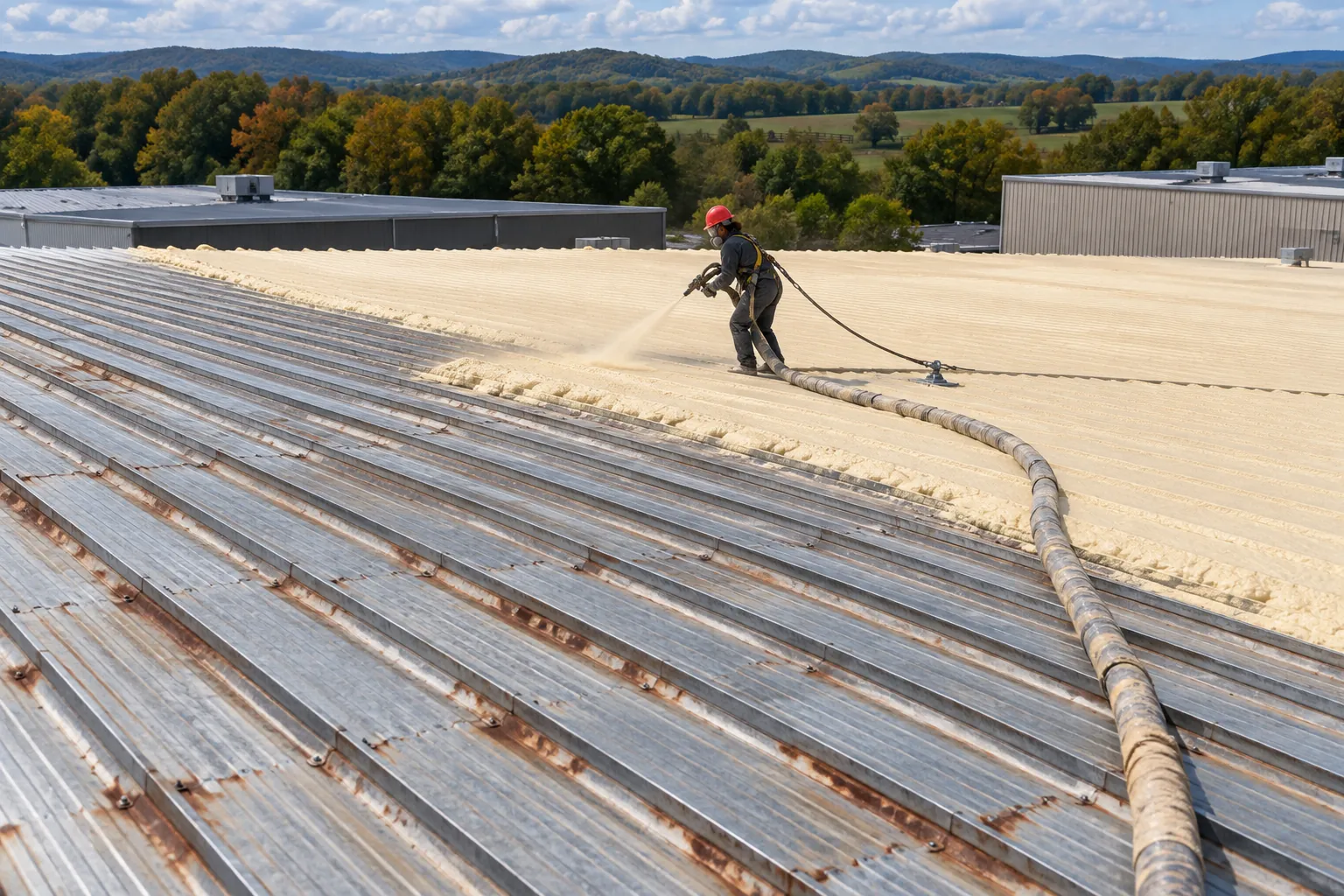
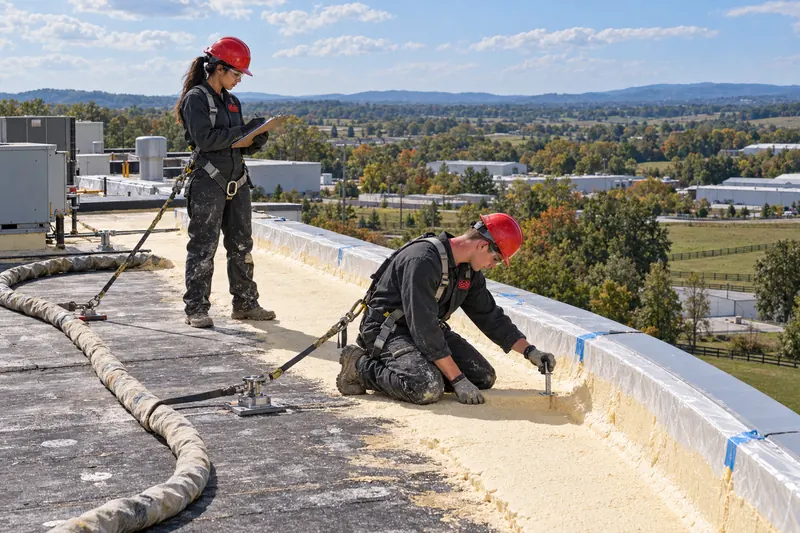
Roofer spraying tan foam over an old ribbed metal roof, seen from up the slope
  • About R-6 Per InchClosed-cell foam insulation
  • One Continuous LayerLaps, curbs, and pipes sealed
  • Thickness MeasuredReadings at edges and drains
  • Permit Office FirstLFUCG for Lexington addresses

Is This Roof A Fit For Spray Foam?

Foam needs a clean, dry, attached surface to bond to. Here is how we sort a Lexington roof into ready now or repair first.

Ready Now

  • Metal shop roofs with leaking laps but tight panels
  • Built-up roofs that core cuts show are dry
  • Single-ply roofs still attached over dry insulation
  • Warehouses that need insulation added from above
  • Roofs crowded with curbs, vents, and conduit

Repair First

  • Wet board around drains and at low edges, cut out first
  • Panels rusted through, or a deck with deep sag
  • Blisters in built-up roofing, cut and patched
  • More roof layers than code allows on one deck
  • Visible roofline changes in an H-1 historic overlay, pending approval
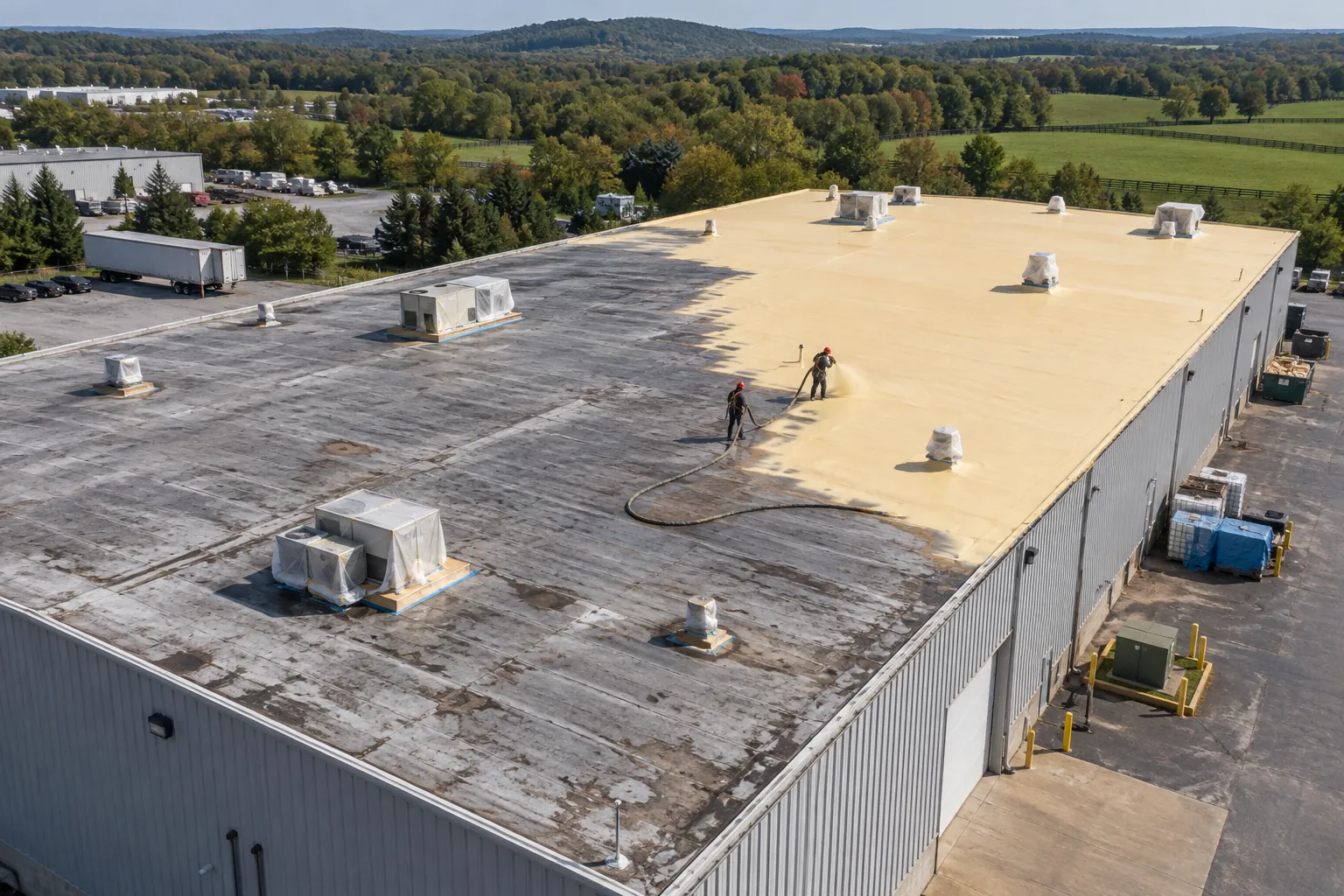
Drone view of a long warehouse roof with fresh tan foam covering about half the surface

Where Lexington Roofs Leak Before Foam

Metal roofs and flat roofs leak in predictable places. These five details get extra prep on almost every job.

Metal roof plan sketch with five numbered leak points12345
Sketch of a metal roof plan, drawn for illustration.
  1. Fastener Rows

    Screws loosen as panels expand and contract, and cracked washers let water follow the shank. We tighten or replace loose ones before any foam goes on.

  2. Ridge And End Laps

    End laps hold dirt and stay wet, so rust starts there first. Crews wire-brush or power-wash each lap, then apply a rust-inhibiting primer.

  3. Equipment Curb

    Curbs added after the original roof often sit on loose flashing. Foam is sprayed up all four sides and over the base so the curb joins the roof surface.

  4. Eave And Gutter Edge

    Water leaving the roof runs over the eave into the gutter. We mask the gutter, detail the edge, and keep foam out of the flow line.

  5. Panel Ribs And Condensation

    Bare panels drip on cold mornings when warm indoor air meets cold steel. Foam on the outside keeps the underside warmer, which cuts that dripping.

Commercial Roof Coating Options for Lexington

Every foam roof gets one of three topcoats. The choice comes down to drainage, foot traffic, and what is already on the roof.

CoatingHolds Up Best AgainstWatch ForCommon Fit In Lexington
SiliconeStanding water and UVCollects dirt; later coats are mostly siliconeFlat roofs with slow interior drains
AcrylicSun, with a bright white finishWeak under ponding; needs a warm, dry cureWell-sloped roofs with clear scuppers
UrethaneFoot traffic and impactSolvent odor while it goes onWalk paths and equipment areas

A small adhesion patch confirms a new coat will bond before the whole roof is coated.

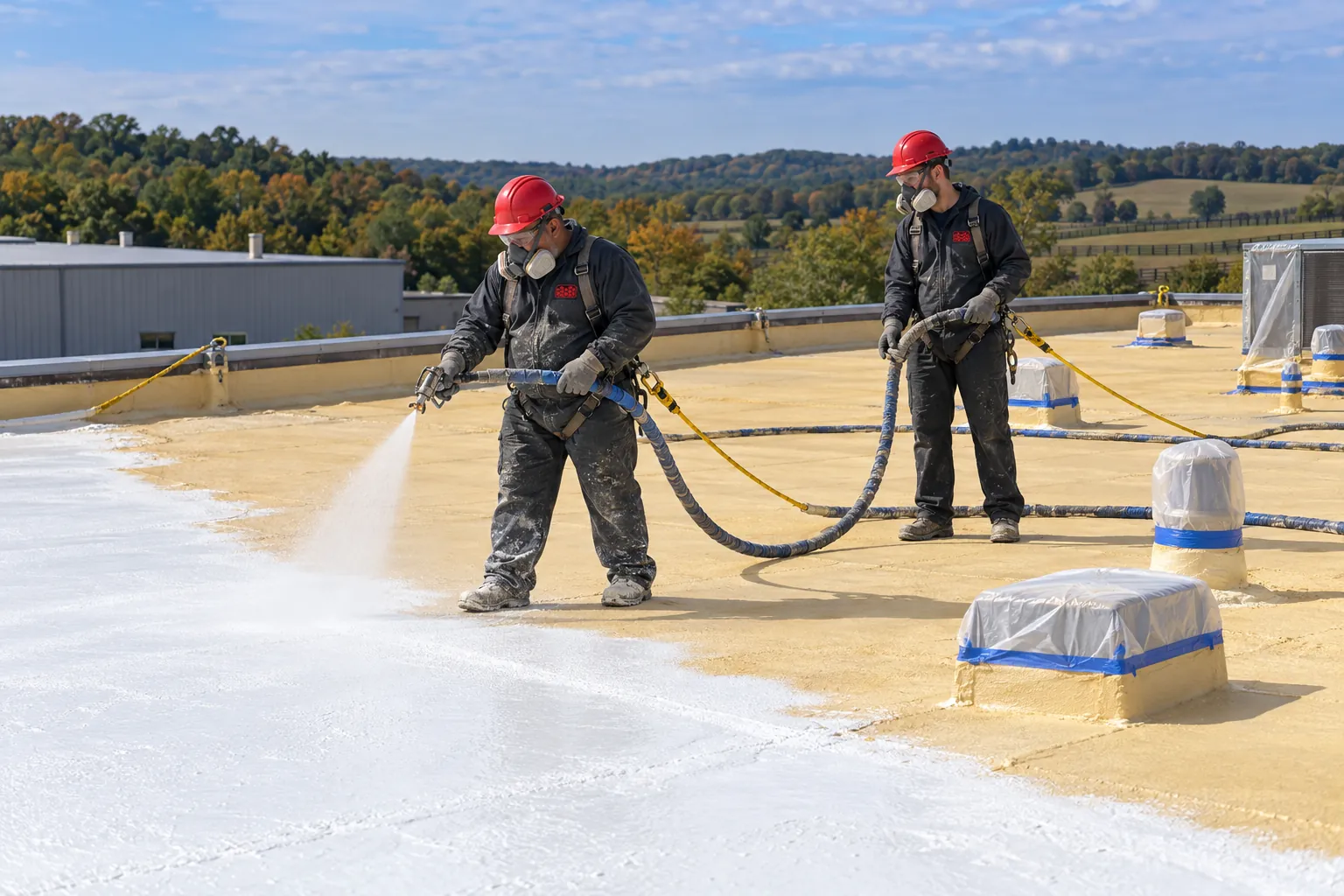
Roofer spraying white topcoat over cured tan foam while a second roofer watches the edge

Benefits of Coating Your Roof

Foam and its topcoat go over most dry roofs without a tear-off. These are the gains we can point to, and what each one depends on.

  • Tear-Off Costs And Landfill Loads

    Removing a dry roof means dumpsters, crane picks, and an open deck exposed to Kentucky rain.

    What Coating Changes

    When cores show dry insulation, the old roof stays as the base layer, so less material goes to the landfill and the deck stays covered.

  • Business Interruption

    Tear-offs push noise, debris, and open-deck risk onto tenants for weeks.

    What Coating Changes

    Spraying runs section by section with intakes covered, so most buildings stay open, and tenants get the schedule ahead of time.

  • Renewing Instead Of Replacing

    A worn single-ply roof has to come off when its seams give out.

    What Coating Changes

    A foam roof is renewed by cleaning and recoating the topcoat while the foam underneath is still dry and firm, so the insulation stays put.

  • Heat Moving Through The Deck

    Uninsulated steel decks let summer heat and winter cold move freely through the roof.

    What Coating Changes

    Foam adds continuous insulation and air sealing at the deck. Savings track the existing insulation, HVAC equipment, and hours of use, so we quote no number.

Rooftop Unit Leaking Into The Office?

Tell us which unit, what the roof is made of, and roughly how big it is. We can look at it on the same walk as the rest of the roof.

(859) 204-7918

From First Walk To Final Coat In Lexington

Each step below is a real stage on a Lexington foam job, split between roof work and the building-side planning around it.

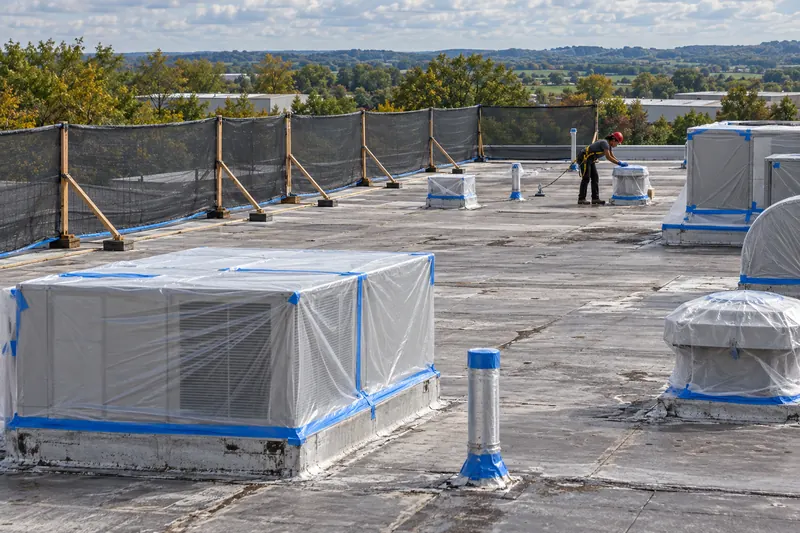
Rooftop units and vents wrapped in plastic and tape behind a braced wind screen before sprayingRoofer measuring foam depth at a roof edge while a coworker records the reading
  1. On The Roof

    Step 1: Inspect Your Roof

    Expect a full roof walk with a moisture meter, cores cut where readings jump, and photos of each drain, curb, scupper, and parapet cap before any plan is written.

  2. Around The Building

    Step 2: Check Permits And Overlays

    Lexington addresses go through the LFUCG Division of Building Inspection, and H-1 overlay roofs need approval for visible changes. We sort both before ordering material.

  3. On The Roof

    Step 3: Strip, Dry, And Prime

    Wet board is cut out and replaced, loose gravel vacuumed, blisters opened, and rusty laps primed. Every intake, skylight, and edge gets masked against overspray.

  4. Around The Building

    Step 4: Watch Wind And Dew

    Spraying waits for dry panels and light wind. Dew on metal is checked with a surface thermometer each morning, and cars are moved off the downwind side.

  5. On The Roof

    Step 5: Spray To Thickness, Then Topcoat

    Foam rises in passes to the planned depth, tapered toward drains, and a probe confirms it. The topcoat follows, with granules along walk paths to rooftop units.

Spray Foam Roofing Beyond Lexington

The same foam system goes on roofs in six nearby towns, each with its own permit office.

  • Nicholasville

    Jessamine County retail roofs crowded with rooftop units.

  • Wilmore

    Church and school roofs timed around services and classes.

  • Winchester

    Tapered foam and crickets on long Clark County roofs.

  • Mount Sterling

    Rust priming on older metal shops before foam.

  • Paris

    Several barns and sheds on one Bourbon County farm.

  • Cynthiana

    Brick parapets and coping on older downtown buildings.

Commercial Spray Foam Roofing Questions From Lexington Owners

Answers to what owners ask once foam is on the table.

Can Spray Foam Go Over My Existing Roof?

Often, yes, when the old roof is dry, firmly attached, and the structure can take the added weight. Core cuts and a moisture meter find wet areas around drains and along low edges, and that board comes out first.

The building code also limits how many layers can stack on one deck, so we check with the permit office before work starts.

What Weather Conditions Are Needed to Spray Foam?

A dry surface, moderate temperatures, and light wind. Each foam maker publishes limits for surface temperature, humidity, and dew point, and crews follow that data sheet on the day.

In central Kentucky, morning dew on metal panels in spring and fall is the usual delay, since foam sprayed on damp steel bonds poorly and can blister later.

Do Lexington's Historic Districts Require Approval for Roof Work?

Yes, for exterior changes in an H-1 overlay. Lexington has 15 historic districts, and work there needs a Certificate of Appropriateness; staff approve minor changes and the Board of Architectural Review takes larger ones.

A flat roof hidden behind a downtown parapet rarely shows from the street, while changes to parapet caps or cornice flashing draw a closer look.

Does Freeze-Thaw Cycling in Kentucky Damage Spray Foam?

Intact closed-cell foam handles it well because so little water gets in. Damage starts where the coating wears thin or birds peck the surface open, and water freezing in those holes widens them over a winter.

Lexington saw minus 7 degrees on January 21, 2024 and 64 four days later, so we check parapets and drain bowls each spring.

How Do Hail and Severe Storms Affect a Spray Foam Roof?

Hail usually leaves small dents, called hail pocks, that get sealed during routine repair, since firm foam absorbs the hit. What matters is whether the coating split at each dent.

After a storm, look for pocks, lifted edge metal, and debris piled against curbs, and have the damage photographed before repairs.

Price A Foam Roof For Your Lexington Building

Roof size, roof type, and condition are enough to start a ballpark number.

Call Us (859) 204-7918