
Commercial Foam Roof Work

Spray Foam Roofing Services In Lexington

Spray foam roofing services in Lexington for every stage of a foam roof: new foam over an old roof, foam over metal, recoats, and repairs.

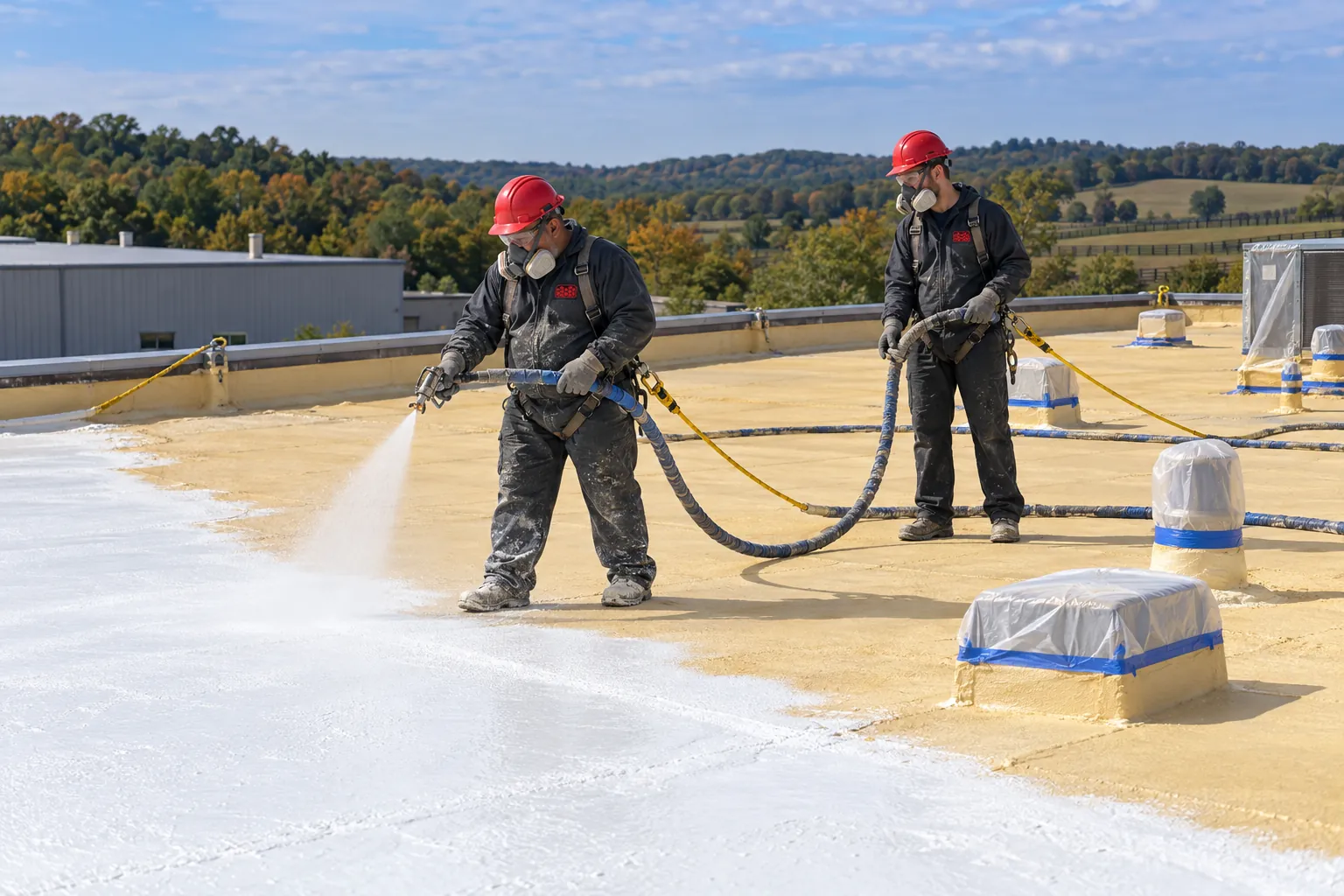
Roofer spraying white topcoat over cured tan foam while a second roofer watches the edge

Four Kinds Of Foam Work We Take On

Every job below falls under our commercial spray foam roofing service. Each card names the roof it fits.

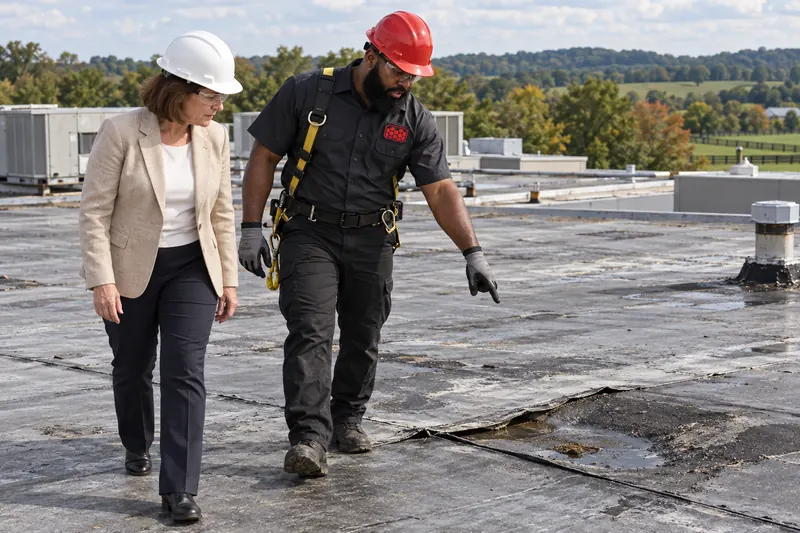
  • Roofer pointing out open seams on an aged flat roof while walking it with a building owner

    New Foam Over A Flat Roof

    Dry built-up, modified, or single-ply roofs get foam sprayed over the existing surface, tapered toward drains, and coated.

    • Core cuts confirm dry insulation
    • Gravel vacuumed, blisters cut
    Foam over flat roofs in Lexington
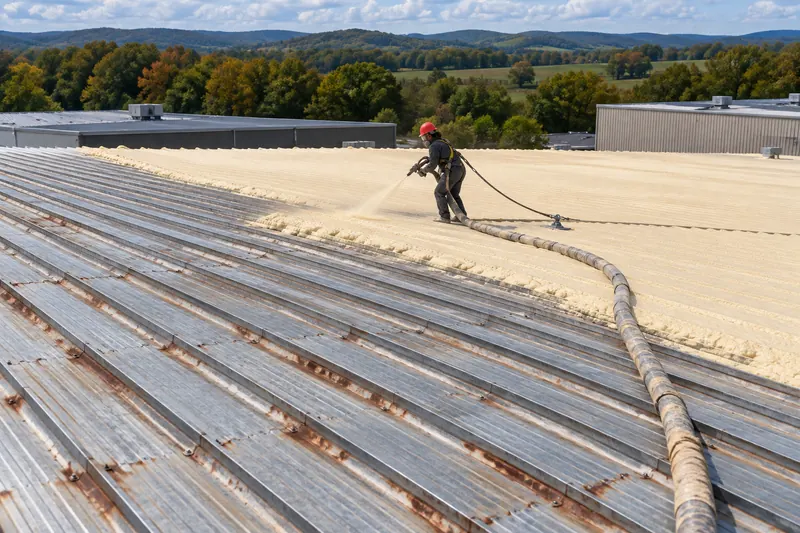
  • Roofer spraying tan foam over an old ribbed metal roof, seen from up the slope

    Foam Over Metal Panels

    Metal shops and warehouses get their laps and screws primed, then foam over the whole panel field and a topcoat.

    • Loose screws replaced first
    • Condensation drip cut
    Foam over metal roofs in Lexington
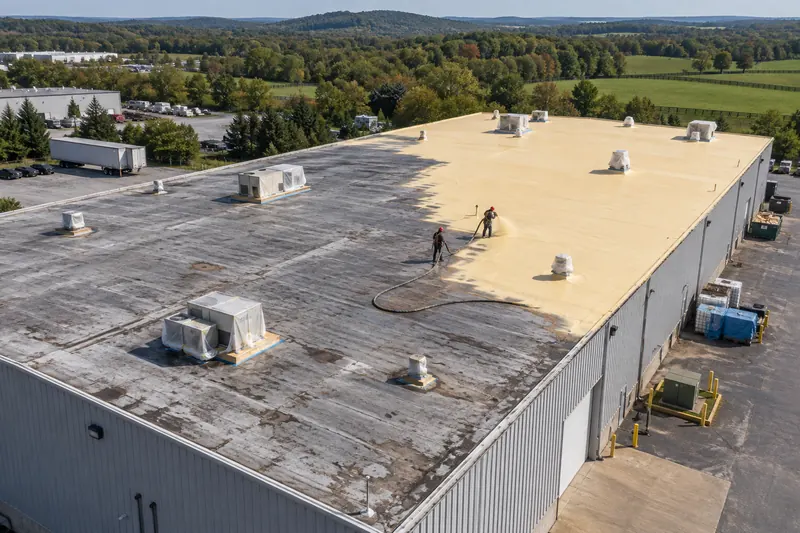
  • Drone view of a long warehouse roof with fresh tan foam covering about half the surface

    Recoating An Existing Foam Roof

    Foam roofs whose topcoat has worn thin or chalks on a fingertip get cleaned, small damage fixed, and a new coat applied.

    • Dry film thickness gauged
    • Adhesion patch before the full coat
    Topcoat choices for Lexington foam roofs
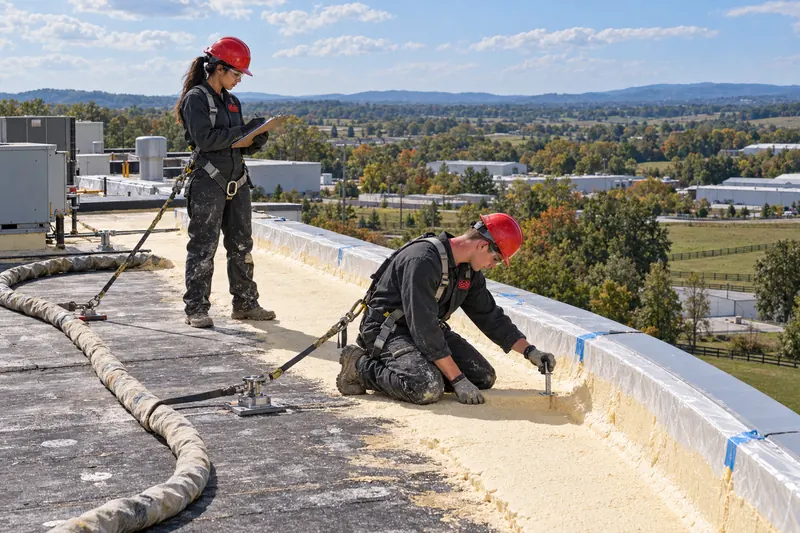
  • Roofer measuring foam depth at a roof edge while a coworker records the reading

    Spot Repair And Partial Refoam

    Bird pecks, hail pocks, and wet foam near drains or curbs get cut out, refoamed, and recoated in place.

    • Moisture survey sets the edges
    • Matched to the surrounding foam
    Repair, recoat, or replace answers

Recoat, Refoam, Or New Foam On Your Roof?

The roof itself decides which job it needs. These are the signs we look for on the walk.

Signs A Recoat Is Enough

  • Chalky topcoat that rubs off on a fingertip while the foam below stays firm, dry, and tan
  • Hairline crazing in the coating that stops at the surface and never reaches the foam
  • Moisture readings across the field that match a dry control spot near the roof hatch
  • Small bird pecks or hail pocks that can be cut out, sealed, and coated in an afternoon
  • Drains and scuppers that still empty within two days of a rain

Signs The Roof Needs More

  • Soft or crushed foam around drains, curbs, and walk paths where boots and water collect
  • Wet readings that spread past a single curb into the insulation under the field
  • Bare foam turned dark brown and powdery after the coating wore through in places
  • Rust bleeding through at metal panel laps and screw heads under thin foam
  • Ponding that sits longer than two days because the foam was never tapered toward the drain

How Spray Foam Compares With TPO And Metal Retrofit

Spray foam, TPO, and metal retrofit panels all go over many existing low-slope roofs. They differ most in seams, insulation, and penetrations.

FactorSpray FoamTPO Single-PlyMetal Retrofit
SeamsNone, one sprayed layerHeat-welded at each sheet lapPanel laps and fasteners
InsulationBuilt in, about R-6 per inchSeparate boards under the sheetAdded with new framing
Curbs And PipesFoam sprayed up and aroundBoots and hand-welded flashingCustom curb flashing
Slope To DrainsFoam tapered in placeTapered boardsFraming sets new pitch
UpkeepPeriodic recoat of the topcoatSeam and flashing checksFastener and sealant checks

We install spray foam roofs. TPO and metal retrofit appear here for comparison when you weigh options.

Unsure Which Job Your Roof Needs?

Describe the roof and what you see from below, and we will tell you which of the four jobs it points to before anyone climbs up.

(859) 204-7918

The Same Five Stages On Every Foam Job

New roofs, recoats, and repairs all follow these stages; the amount of prep is what changes.

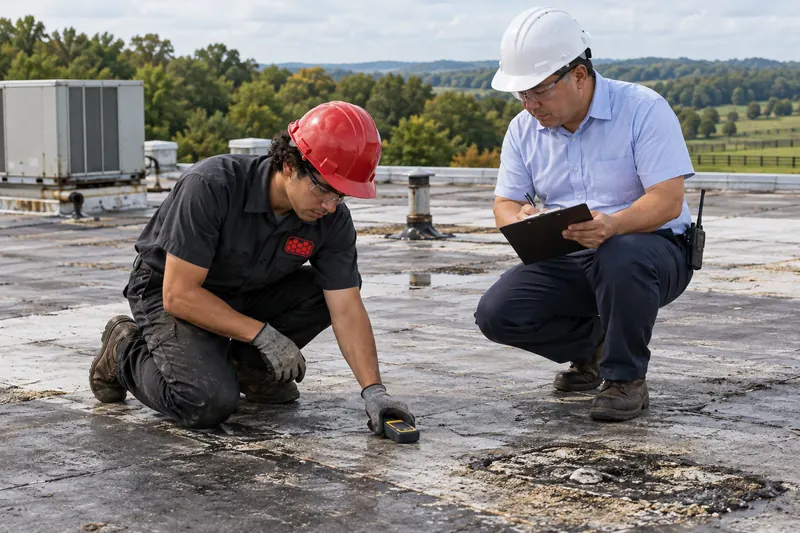
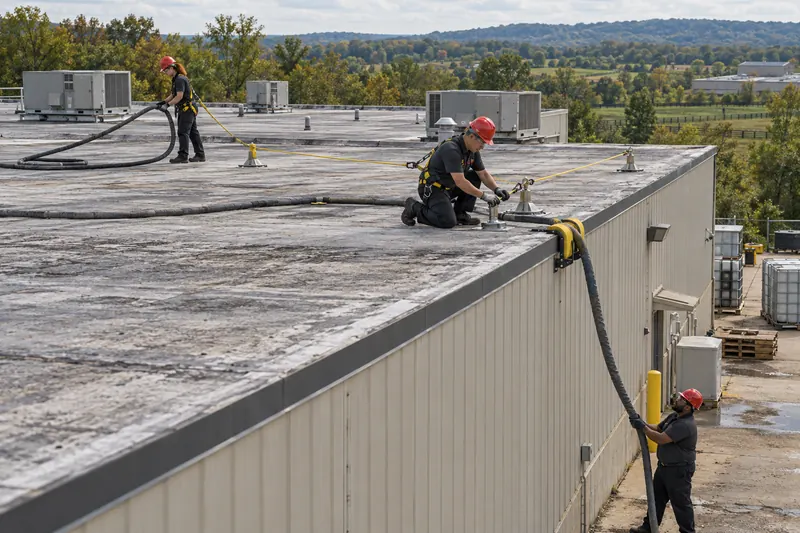
Roofer kneeling with a moisture meter on worn membrane while a plant manager takes notesCrew running spray hose onto an aged flat roof and setting fall protection at the edge
  1. On The Roof

    Step 1: Inspect Your Roof

    Every job opens with a roof walk, moisture readings, and cores where needed, because one roof can need a recoat in one area and a refoam in another.

  2. Around The Building

    Step 2: Write The Scope And Permit Plan

    We put the scope on paper by area: recoat, refoam, or new foam. Then we check whether the town's permit office wants a permit for that scope.

  3. On The Roof

    Step 3: Prepare Each Area

    Recoat areas get washed and spot-repaired; new-foam areas get wet board removed, rust primed, and edges masked. Prep varies most from job to job.

  4. Around The Building

    Step 4: Stage Around Occupants

    Intakes and rooftop units near the work are shut and covered, cars move off the downwind side, and tenants get the schedule for their section of roof.

  5. On The Roof

    Step 5: Spray, Coat, And Record

    Foam goes on where needed, the topcoat covers everything, and thickness readings and photos are recorded area by area.

Questions About Spray Foam Roofing Services In Lexington

Foam types, timing, taxes, and what to gather first.

How Long Does a Spray Foam Roof Installation Take?

Roof size, prep work, and weather set the schedule more than spray time does. Foam goes on quickly once the surface is ready; most of the calendar goes to removing wet sections, priming rusty metal, masking edges and equipment, and cure time between coats.

Spring and fall weather windows fill first.

Can a Spray Foam Roof Qualify for Section 179?

A new roof on an existing nonresidential building can count as qualified real property under Section 179, according to IRS Publication 946. For tax years beginning in 2026, the maximum deduction is $2,560,000, reduced once qualifying purchases pass $4,090,000.

Whether to expense a foam roof is a call for your CPA.

What Should I Gather Before a Roof Inspection?

The roof's age, past repair records, and where leaks show up inside. A floor plan marked with leak spots or photos of ceiling stains, drawings that show the deck and drains, roof access details, and a list of rooftop equipment all make the walk faster.

How Thick Does The Foam Go On A Commercial Roof?

Thickness follows the job. A recover over a dry flat roof usually gets enough foam to reach the insulation target and build slope toward the drains, so it runs thicker at the high points and thinner at the drain sumps.

Readings are taken with a probe gauge across each area and written down with photos, and the topcoat goes on in measured passes over the cured foam.

Do You Also Install TPO Or Metal Panels?

Our work is spray foam: new foam over existing roofs, recoats, and foam repairs. If an inspection shows a roof needs a different system, we tell you that plainly.

Find Out Which Foam Work Your Roof Needs

Start with the roof size and what you see from below.

Call Us (859) 204-7918